

A minimally invasive spine surgery to remove the portion of a disc pressing on a nerve.
Overview
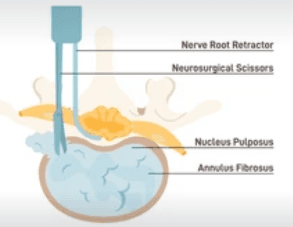
A microdiscectomy is a minimally invasive surgery used to relieve pain caused by a damaged disc (soft cushion between the bones of the spine) pressing on a nerve in the spine. The procedure is most commonly carried out in the lower back (lumbar spine).
The spine is made up of bones called vertebrae. Between these bones are soft cushions called discs. Sometimes, a disc may bulge or rupture and press on nearby nerves. This can cause pain, numbness, tingling or weakness in the back, buttock or legs.
Microdiscectomy helps relieve pressure on the affected nerve and reduce symptoms.
Why is microdiscectomy performed?
Your doctor may recommend microdiscectomy if you have:
- Severe leg pain (sciatica)
- Numbness or tingling in the leg or foot
- Weakness in the leg muscles
- Loss of function due to nerve compression
- Pain that does not improve with medicines or physiotherapy
Who may not be suitable for microdiscectomy?
Patients with more serious spine problems may not be suitable for this surgery.
This may include:
- Patients with wear and tear affecting several parts of the spine
- Patients with problems involving more than one spinal disc
- Patients with unstable spine bones
- Patients with spine infections
- Patients with severe bending or deformity of the spine
These patients may require a different or more complex type of spinal surgery.
Symptoms of a slipped disc
Common symptoms include:
- Lower back pain
- Pain travelling down one leg
- Tingling or “pins and needles”
- Muscle weakness
- Difficulty standing or walking
- Increased pain while coughing or sneezing
The symptoms depend on which nerve is affected.
How is the condition diagnosed?
Your doctor will ask about your symptoms and examine your back and legs. They may check:
- Muscle strength
- Reflexes
- Walking ability
- Areas of numbness or tingling
Tests that may be recommended include:
- Magnetic resonance imaging (MRI) scan: Shows the damaged disc and affected nerve
- Computed tomography (CT) scan or X-ray: Checks the bones of the spine and rules out other problems
- Electromyography (EMG): Checks how well the muscles and nerves are working
- Nerve conduction study (NCS): Measures how well electrical signals travel through the nervesTop of Form
Bottom of Form
Preparing for surgery
Before surgery, your healthcare team may advise:
- Blood tests
- ECG or chest X-ray if needed
- Stopping certain medicines such as blood thinners
- Fasting for several hours before surgery
- Informing the doctor about allergies or medical conditions
You should arrange for someone to take you home after discharge.
Procedure overview
Anaesthesia
- The surgery is performed under general anaesthesia, so the patient is asleep during the procedure
During the surgery
- A small cut is made in the lower back over the affected disc
- The muscles are gently moved aside to reach the spine
- A surgical microscope is used to give a clear and magnified view
- The surgeon removes the part of the damaged disc pressing on the nerve
- Once the pressure on the nerve is relieved, the incision is closed with stitches or surgical glue
- The operation usually takes about 2-4 hours or longer
Recovery
- Hospital stay: Most patients can go home the same day or after an overnight stay in hospital
- Early recovery: Patients are usually encouraged to walk on the same day after surgery. Leg pain often improves quickly, although mild soreness around the incision is common
- Rehabilitation: Heavy lifting, bending, and strenuous activities should be avoided for several weeks. Physiotherapy may be advised to improve strength and flexibility.
- Return to daily activities: Many patients can return to light activities within 1–2 weeks. Full recovery usually takes about 4–6 weeks. Strenuous exercise should only be started after approval from the surgeon.
Risks and possible complications
Microdiscectomy is generally safe, but like all surgeries, it carries some risks.
Possible complications include:
- Infection
- Bleeding
- Nerve injury causing numbness or weakness
- Leakage of spinal fluid
- Return of the slipped disc symptoms
Your surgeon will discuss these risks before surgery.
Benefits of microdiscectomy
- Relief from leg or arm pain caused by nerve pressure
- Small incision with less damage to surrounding tissues
- Faster recovery compared with traditional surgery
- Short hospital stay, with many patients going home the same day
- High success rate in reducing symptoms
Warning signs
Contact your doctor immediately if you:
- Develop new pain, weakness or numbness in the legs
- Have difficulty controlling your bladder or bowels
- Notice redness, swelling, warmth or fluid discharge around the stitches
- Develop fever or increasing pain after surgery
Lifestyle tips after surgery
- Return to light activities gradually, as advised by your doctor.
- Avoid heavy lifting and strenuous exercise during recovery.
- Follow your physiotherapy or rehabilitation programme regularly.
- Maintain good posture while sitting, standing, and lifting.
- Strengthen your back and core muscles to support the spine.
- Maintain a healthy weight and stay physically active.
These steps can help reduce the risk of future spine problems.

Myths & Facts
Microdiscectomy is a major surgery.
Microdiscectomy is a minimally invasive procedure performed through a small incision.¹
Bed rest is needed for many weeks after surgery.
Most patients are encouraged to walk on the same day after surgery.¹
All back pain requires surgery.
Many patients improve with medicines, physiotherapy and other non-surgical treatments.²
Recovery after surgery takes many months.
Many patients return to light activities within 1–2 weeks.¹
A slipped disc always comes back after surgery.
Most patients have long-term relief, although recurrence can happen in a small number of cases.¹
Frequently Asked Questions
Will I be awake during the surgery?
No. The surgery is performed under general anaesthesia, so you will be asleep during the procedure.¹
How long does the surgery take?
The operation usually takes about 2–4 hours, depending on the condition being treated.¹
When can I walk after surgery?
Most patients are encouraged to walk on the same day after surgery.¹
How long does recovery take?
Many patients return to light activities within 1–2 weeks. Full recovery usually takes about 4–6 weeks.¹
When should I contact my doctor after surgery?
Seek medical advice if you develop fever, increasing pain, weakness, numbness, or redness and discharge around the stitches.³
Speak to a neurology specialist
Get an expert opinion and a personalised treatment plan at Sterling Hospitals.