

A minimally invasive procedure that fills a brain aneurysm with tiny coils to prevent rupture.
Overview
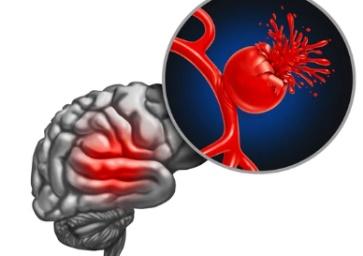
A brain aneurysm is a swelling or bulge in a blood vessel in the brain. Most brain aneurysms do not cause symptoms or problems. However, if an aneurysm bursts, it can cause bleeding around the brain (a haemorrhagic stroke), which is a serious medical emergency.
What causes a brain aneurysm?
The exact cause is not always known, but risk factors include:
- High blood pressure
- Smoking
- Family history of aneurysms
- Older age
- Heavy alcohol use
- Head injury or certain inherited medical conditions that weaken the blood vessel
Symptoms of a brain aneurysm
Small aneurysms may not cause symptoms. A larger or leaking aneurysm may cause:
- Severe headache
- Blurred or double vision
- Pain above or behind the eye
- Weakness or numbness
- Difficulty speaking
- Loss of balance
A burst aneurysm often causes a sudden, extremely severe headache.
How is a brain aneurysm diagnosed?
Tests may include:
CT (Computed Tomography) scan: Uses X-rays and a computer to create detailed pictures of the brain
• MRI (Magnetic Resonance Imaging) scan: Uses magnets and radio waves to produce detailed images of the brain and blood vessels
• CT angiography or MR angiography: Special scans using a dye (contrast) to show blood vessels clearly and help detect aneurysms
• Cerebral angiogram: A detailed test where a thin tube (catheter) is inserted into a blood vessel and dye is injected to get clear images of blood vessels in the brain
What is the treatment for brain aneurysm?
Small brain aneurysms that are not causing symptoms may only need regular scans to monitor them.If there is a risk of rupture (bursting), or if the aneurysm has already burst, treatment may be needed.
Main treatment options include:
• Surgical clipping – a small metal clip is placed on the aneurysm to stop blood flow into it
• Endovascular coiling – tiny coils or a mesh tube are placed inside the aneurysm to reduce blood flow and help seal it
Aneurysm Coiling
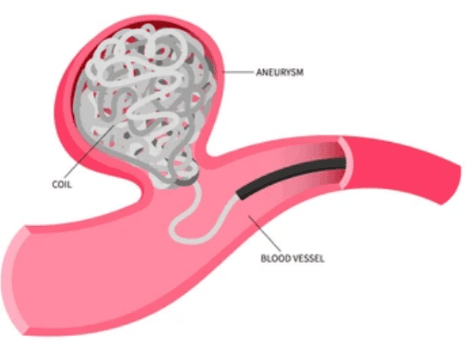
- Aneurysm coiling is a minimally invasive procedure used to treat a brain aneurysm
- During coiling, tiny platinum coils are placed inside the aneurysm to block blood flow and reduce the risk of rupture or bleeding
- The coils change the blood flow inside the aneurysm, helping a clot to form
- This clot provides a seal to prevents blood from entering the aneurysm
- The procedure is done without opening the skull
Procedure details
Before surgery:
- Blood pressure, pulse and temperature will be checked
- Blood tests and scans may be performed
- Tell your doctor about medicines and allergies
- You may need to stop eating and drinking for several hours before surgery
Step-by-step procedure overview
- You will be taken to a special room with scanning machines
- A small area in your groin will be shaved
- The doctor will make a small cut in the groin
- A thin tube called a catheter will be placed into a blood vessel in your leg
- The catheter is gently guided through the blood vessels to the brain
- Small platinum coils are passed through the catheter into the aneurysm
- Several coils may be used to fill the aneurysm
- Sometimes, a small mesh tube called a stent may be used to keep the coils in place
- If a stent is used, you may need blood-thinning medicine as advised by your doctor
- Once the coils are in place, the catheter is removed
- The small opening in the groin is closed
- You may have mild pain or bruising in the groin afterwards
- The procedure usually takes at least 3 hours or longer
After the procedure
- You will be taken to a recovery room after the procedure
- Nurses will closely monitor you for a few hours
- They will check your blood pressure, pulse, breathing, and oxygen levels
- Simple checks will be done to make sure you are waking up well from the anaesthetic
- The nurses will check the wound in your groin and the blood flow in your leg
- You may need to lie flat for some time after the procedure
- You may receive pain relief for discomfort or headache
- A drip may be used to give fluids and prevent dehydration
- Some people may have a urinary catheter to drain urine
- Compression stockings may be used to help prevent blood clots in the legs
- Mild groin pain or bruising can happen for a short time after the procedure
- Most people recover quickly after planned coiling
At home after surgery
You may be advised to:
- Get plenty of rest
- Avoid heavy lifting
- Take medicines as prescribed
- Attend follow-up appointments
- Avoid smoking and alcohol
How successful is coiling?
- Research shows coiling is an effective treatment for brain aneurysms
- It can reduce the risk of future bleeding
- Studies have shown good survival rates and lower risk of long-term disability after treatment
Can the coils move?
- Once placed, the coils are very unlikely to move out of the aneurysm
- Over time, the coils may settle and create space inside the aneurysm
- Some people may need additional coils or further treatment
- Your doctor will decide if follow-up scans are needed
What are the risks of aneurysm coiling?
- Risks depend on the size and location of the aneurysm, overall health, and whether the aneurysm has burst
- Possible complications may include:
- Weakness or numbness in an arm or leg
- Problems with speech or vision
- Bleeding
- Infection
- Damage to the blood vessel in the groin
- Doctors consider aneurysm coiling to be a safe procedure
Warning signs (Red flags)
Seek urgent medical help if you notice:
- Sudden severe headache
- Weakness or numbness
- Difficulty speaking
- Fever
- Confusion
- Seizures
- Problems with vision
Lifestyle changes and long-term care
• Stop smoking if you smoke• Keep your blood pressure under control• Eat a healthy balanced diet• Exercise regularly• Maintain a healthy weight• Avoid excessive alcohol• Do not use illegal drugs

Myths & Facts
Brain aneurysm coiling involves opening the skull.
Aneurysm coiling is usually performed through blood vessels without opening the skull.
Coils can easily move after treatment.
Once placed, the coils are very unlikely to move out of the aneurysm.
All brain aneurysms need surgery immediately
Some small aneurysms may only need regular monitoring and scans.
Aneurysm coiling cures the condition forever
Some people may need follow-up scans or additional treatment later
Aneurysm coiling is unsafe
Doctors consider aneurysm coiling to be a safe and effective procedure
Frequently Asked Questions
What is aneurysm coiling?
Aneurysm coiling is a minimally invasive procedure used to treat a brain aneurysm using tiny platinum coils.
How long does the procedure take?
The procedure usually takes at least 3 hours or longer.
Will I need to stay in hospital after the procedure?
Yes. Most people stay in hospital for monitoring after the procedure.
Can I return to normal activities after coiling?
Most people recover relatively quickly, but your doctor will advise when it is safe to return to normal activities.
What warning signs should I watch for after treatment?
Seek urgent medical help if you develop severe headache, weakness, difficulty speaking, seizures, confusion, or vision problems
Speak to a neurology specialist
Get an expert opinion and a personalised treatment plan at Sterling Hospitals.
