

An implanted pump that delivers medicine directly to the spinal fluid to treat severe muscle spasticity.
Overview
What is spasticity?
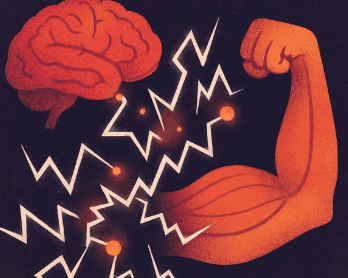
Spasticity can be described as muscles becoming stiff or tight without being able to control it. It is a common symptom of condition that affects the brain, spinal cord, or nerves (neurological disease) and can range from mild to severe and change over time, often from day to day or hour to hour. Other associated features can include spasms, pain, weakness and shaking or jerking movements of a muscle (clonus). Spasticity is not always bad, as some people use the stiffness in their muscles to help them stand, transfer or walk. However, prolonged spasticity may result in shortening of muscles, which further increases stiffness, limits range of movement of limbs and is not always responsive to drug treatments.
Why does spasticity happen?
- The brain, spinal cord, and muscles normally work together to control movement
- Conditions such as stroke (damage to the brain caused by interrupted blood supply), multiple sclerosis (a condition where the body attacks the nerves), head injury, or spinal cord injury can damage these nerve pathways
- This can cause muscles to become overactive, leading to stiffness and spasms
Symptoms of severe spasticity
Symptoms of severe spasticity may include:
- Muscle stiffness
- Painful muscle spasms
- Difficulty walking or moving
- Tight or rigid muscles
- Poor posture or balance
- Difficulty with daily activities such as dressing or sitting comfortably
Management of spasticity
How is spasticity managed?
- Mild to moderate spasticity can often be managed with:
- Exercises and stretching
- Physiotherapy
- Avoiding trigger factors
- Anti-spasticity medicines taken by mouth
- Sometimes spasticity can become severe and difficult to control
- Severe spasticity may affect daily activities and quality of life
- Intrathecal Baclofen treatment may be considered if other treatments do not help enough
What does intrathecal mean?
- ‘Intrathecal’ means the space around the spinal cord
- This space contains cerebrospinal fluid (CSF), a clear fluid that flows around the brain and spinal cord
- The CSF helps protect these delicate parts of the body by acting like a cushion or shock absorber
What is Baclofen?
Baclofen is a medicine used to reduce muscle stiffness and spasms
It works by calming nerve signals in the brain and spinal cord
What is intrathecal Baclofen?
- Intrathecal Baclofen is given into the fluid around the spinal cord through a small pump
- It does not cure the underlying condition, but it may help movement and comfort
- It can also make treatments such as physiotherapy more effective
- It is often used for conditions such as multiple sclerosis, cerebral palsy, or spinal cord injuries
Why does intrathecal Baclofen work well?
- The nerve receptors that respond to Baclofen are mainly found in the spinal cord
- Intrathecal Baclofen delivers the medicine directly to these receptors
- Because the medicine goes straight to where it is needed, much smaller doses can be used compared with tablets
- Smaller doses may help reduce side effects such as drowsiness
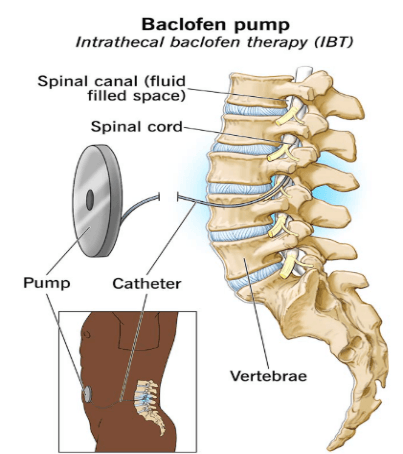
What is an Intrathecal Baclofen Pump?
- The intrathecal Baclofen (ITB) system has two parts: a pump and a thin tube called a catheter
- The pump stores the Baclofen medicine
- The catheter carries the medicine from the pump to the fluid around the spinal cord
- Because the medicine goes straight to where it is needed, much smaller doses can be used than with tablets
- Smaller doses may help reduce side effects such as drowsiness
Who may benefit from a Baclofen pump?
- People with severe muscle stiffness or spasms (spasticity)
- People whose symptoms are not well controlled with tablets
How is suitability for a Baclofen pump checked?
- A specialist team will assess whether the pump may help
- A small test dose of Baclofen is injected into the spinal fluid using a spinal tap
- The team will check how the body responds over the next few hours
- The effects are temporary but help decide if the pump is suitable
What is Baclofen pump surgery?
- It is an operation to place a pump under the skin to deliver Baclofen directly around the spinal cord
Where is the pump placed?
- The pump is usually placed under the skin of the abdomen (tummy)
What happens during surgery?
- You will receive general anaesthesia and will be asleep during the operation
- The surgeon places the pump under the skin of the abdomen
- A thin tube called a catheter is connected from the pump to the spinal fluid
- The pump is filled with Baclofen and programmed to deliver the required dose
- The surgery usually takes about two hours
Will I need to stay in hospital?
- Yes. A short hospital stay is usually needed after surgery
- Some people may also need rehabilitation before going home
How long does recovery take after Baclofen pump surgery?
- Recovery usually takes about 6 to 8 weeks
- Your doctor will advise you based on your individual recovery
What should I do after surgery?
- Rest and avoid strenuous activities until your doctor says it is safe
- You may need to wear an abdominal support belt (binder) for a few weeks
Is a Baclofen pump permanent?
- Yes. The pump and catheter are placed inside the body during surgery
- If needed, the pump and catheter can be removed by a surgeon
Does the pump need refilling?
- Yes. The pump needs regular refills by a trained healthcare professional
- Refills are usually needed every 1 to 6 months
Can the Baclofen dose be changed?
- Yes. Your healthcare provider can adjust the dose during clinic visits if needed
What happens if refill appointments are missed?
- Missing refills may cause Baclofen withdrawal, which can be serious
What are the signs of Baclofen withdrawal?
Seek medical help immediately if you notice signs like:
- Severe muscle stiffness or spasms
- Itching without a rash
- Severe pain or discomfort
- Sweating
- Fever
- Dizziness
- Nausea
- Seizures (fits)
Does the pump need replacing?
- A Baclofen battery lasts for around 6-7 years, however timeframe may vary depending on the patient and condition
- The pump battery will eventually run out and the pump will need replacing
- The catheter usually does not need replacing unless there is a problem
Benefits of Baclofen pump
- Helps reduce severe muscle stiffness and spasms
- Can help people with conditions affecting the brain or spinal cord
- Delivers medicine continuously throughout the day
- May cause fewer side effects than Baclofen tablets
- The dose can be adjusted at different times of the day to suit individual needs
- The pump and catheter can be removed if needed
Side effects or complications of a Baclofen pump?
Possible complications after surgery:
- Infection
- Bleeding or bruising
- Leakage of spinal fluid
Common side effect:
- Increased muscle weakness
- This may improve if the Baclofen dose is reduced
Rare pump or catheter problems:
- Pump not working properly
- Catheter moving or becoming blocked
- Skin breakdown over the pump or catheter
- Baclofen withdrawal
- Baclofen overdose
- Serious complications are uncommon but can sometimes be life-threatening.
Early medical treatment is important if problems occur

Myths & Facts
Baclofen pump cures spasticity.
Baclofen pump does not cure the underlying condition, but it can help reduce muscle stiffness and spasms and improve comfort and movement.
The Baclofen pump is placed outside the body.
The pump is placed under the skin of the tummy and connected to the spinal fluid with a catheter.
Baclofen pumps use the same dose as tablets.
Much smaller doses are needed because the medicine is delivered directly around the spinal cord.¹
Everyone with spasticity needs a Baclofen pump.
Baclofen pumps are usually considered for people with severe spasticity that is not well controlled with tablets or other treatments.
The Baclofen pump cannot be removed.
The pump and catheter can be removed surgically if needed.
Frequently Asked Questions
What does a Baclofen pump do?
It delivers Baclofen medicine directly into the fluid around the spinal cord to help reduce muscle stiffness and spasms.
Will the Baclofen pump cure my condition?
No. It does not cure the condition, but it may improve comfort, movement and daily activities.
How often does the pump need refilling?
The pump usually needs refilling every 1 to 6 months by a trained healthcare professional.
Can the Baclofen dose be adjusted?
Yes. Your healthcare provider can change the dose during clinic visits if needed.
When should I seek medical help?
Seek medical help immediately if you notice severe muscle stiffness, fever, dizziness, seizures or signs that the pump may not be working properly.
Speak to a neurology specialist
Get an expert opinion and a personalised treatment plan at Sterling Hospitals.
