

A minimally invasive procedure to physically remove a clot blocking a brain artery during a stroke.
Overview of the Condition
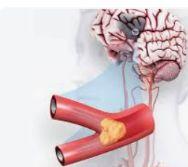
An ischaemic stroke happens when a blood clot blocks the blood supply to part of the brain. It is the most common type of stroke and can affect speech, movement, memory or vision depending on the area of the brain involved. Immediate medical treatment is very important to reduce brain damage and improve recovery.
Why is it important?
The incidence of stroke ranges from 20-60% in Indian population. Early treatment for an ischaemic stroke is important because brain cells can begin to die within minutes when blood flow is blocked. Prompt medical care can help restore blood flow, reduce brain damage and improve recovery.
Who is commonly affected?
Ischaemic stroke commonly affects people with:
- Age >65 years
- Smoking or tobacco/nicotine use
- High blood pressure
- High cholesterol
- Type 2 diabetes
- Alcohol use disorder
- Higher risk in Black individuals
Symptoms
- Weakness or paralysis on one side of the body
- Difficulty speaking or slurred speech
- Sudden vision problems
- Dizziness, loss of balance or coordination
- Confusion or memory problems
- Severe sudden headache
- Nausea or vomiting
- Loss of consciousness or seizures
Treatment Options
- IV thrombolysis: Clot-dissolving treatment given through a vein, usually within 4.5 hours of symptom onset
- Mechanical thrombectomy: A procedure to remove the blood clot from the brain
Procedure Overview and Preparation
What is mechanical thrombectomy and why is it done?
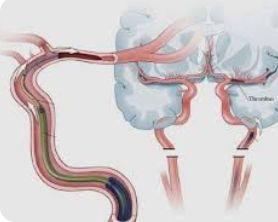
A thrombectomy is a procedure to remove a blood clot from a blood vessel (artery or vein). Blood clots can block blood flow to important parts of the body such as the brain, heart, lungs, intestines, arms, or legs, which can become serious or life-threatening. Removing the clot helps restore normal blood flow and prevent damage to organs or limbs. In some cases, thrombectomy needs to be done urgently within a few hours.
Procedure Overview
Step-by-step
- You will receive medicine to help you relax or sleep
- The doctor makes a small cut or puncture to reach the blocked blood vessel
- Thin tubes (catheters) are guided to the clot using imaging scans
- Special devices are used to remove or break up the clot
- The blood vessel and skin opening are then closed
- The procedure may take one to several hours
Time required
- Several hours
Risks, Benefits and Hospital Stay
Risks and Complications
- Bleeding or bruising at the procedure site
- Damage or narrowing of the blood vessel
- Infection
- Reaction to anaesthesia
- The clot may move to the lungs
- Blood clot may form again after treatment
Benefits
- Helps restore blood flow quickly
- Reduces damage to organs or limbs
- Lowers the risk of severe disability
- May help prevent limb loss
- Can reduce the risk of death
Duration of Hospital Stay
- 1 day
When to Contact a Doctor
Contact your doctor if you have the following: Bleeding from the procedure site
- Chest pain
- Fever
- Shortness of breath
- Dizziness or balance problems
- Confusion or disorientation
- Pain, swelling, or numbness in the arms or legs
- Pus or discharge from the wound site
Myths & Facts
Thrombectomy is done only for stroke patients
It can also be used to remove blood clots from blood vessels in the legs, lungs, heart, or other parts of the body.
Thrombectomy also requires major surgery
Many thrombectomies are minimally invasive and done using thin catheters inserted through a small puncture in the arm or leg.
Recovery after thrombectomy is too long
Some patients may go home the same day or after a short hospital stay, depending on the procedure and their condition.
Once the clot is removed, another clot cannot happen
Blood clots can recur, so medicines and follow-up care are important after the procedure.
Frequently Asked Questions
Why is a mechanical thrombectomy done?
To remove a blood clot and restore blood flow quickly to prevent damage to organs or limbs.
How is the clot removed?
Doctors use special devices through a catheter to pull out, break up, dissolve, or suction out the clot.
How long does the procedure take?
The procedure may take from 1 hour to several hours depending on the location and size of the clot.
What are the common risks?
Risks may include bleeding, infection, blood vessel damage, reaction to anaesthesia, or recurrence of the clot.
Speak to a neurology specialist
Get an expert opinion and a personalised treatment plan at Sterling Hospitals.
