

What is lung cancer?
Overview of the Condition
What is lung cancer?
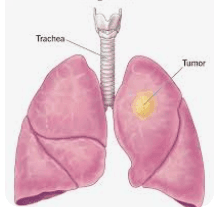
Lung cancer is a disease in which abnormal cells grow uncontrollably in the lungs. Smoking is the major risk factor, although lung cancer can also occur in people who have never smoked. Early diagnosis and quitting smoking can help reduce the risk and improve outcomes.
Why is it important?
Lung cancer can spread to other parts of the body, such as the brain and bones. This may cause symptoms including pain, nausea, or headaches depending on the affected area. Although advanced lung cancer is usually not curable, treatment can help control symptoms and improve quality of life. Lung cancer is the leading cause of cancer in men above 40 years of age.
Causes / Why It Happens
Lung cancer develops when cells in the lungs undergo DNA changes and begin growing uncontrollably, forming a tumour that may spread to other parts of the body. Smoking is the main cause of lung cancer, although it can also occur in people who have never smoked or been exposed to second-hand smoke.
Risk factors
Risk Factors for Lung Cancer
- Smoking
- Exposure to second-hand smoke
- Previous radiation therapy to the chest
- Exposure to radon gas
- Contact with cancer-causing substances such as asbestos, arsenic, chromium, or nickel
- Family history of lung cancer
Symptoms
- Persistent cough that does not go away
- Chest pain
- Coughing up blood
- Hoarseness of voice
- Shortness of breath
- Wheezing
Treatment Options
Lobectomy: Removal of one lobe of the lung, usually when cancer is limited to one section of one lung
Pneumonectomy: Removal of the entire lung when cancer has spread widely or is located centrally in the lung
Wedge resection/segmentectomy: Removal of a small part of the lung, usually for very early-stage cancer confined to a small area
Tests before the surgery
- Physical examination
- Chest imaging such as X-ray, CT scan, or PET scan
- Mediastinoscopy to examine the area between the lungs
- Lung function and breathing tests
- Perfusion scan to assess airflow and blood flow in the lungs
- Biopsy of lung tissue or lymph nodes
- Blood tests
- Heart tests such as ECG, echocardiogram, or stress test
What is lung lobectomy and why is it done?
A lung lobectomy is a surgery to remove one lobe of the lung, commonly performed to treat early-stage lung cancer. It may also be used for lung tumours, infections, lung damage, or congenital lung problems. Most procedures are performed using minimally invasive techniques such as VATS or robotic surgery, while complex cases may require open chest surgery (thoracotomy).
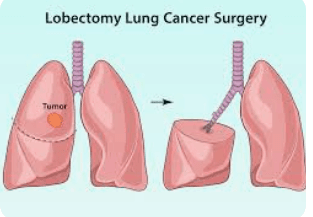
Procedure Overview
Step-by-step
- Small cuts are made in the chest to access the lung
- A camera and surgical instruments are inserted to perform the surgery
- A biopsy may be performed if needed
- The affected lobe is carefully removed while preserving healthy lung tissue
- Nearby lymph nodes may be checked for cancer spread
- Bleeding is controlled and the chest cavity is cleaned
- The incisions are closed with stitches or staples
Time required
- 2 hours
Risks, Benefits and Hospital Stay
Risks and Complications
- Irregular heartbeat (atrial fibrillation)
- Bleeding
- Air leak from the lung
- Blood clots in the legs
- Nerve injury affecting the diaphragm or voice
- Air trapped under the skin
- Infection
- Shortness of breath, especially in people with existing lung disease
Benefits and Expected Outcomes
- Offers the best chance of cure for early-stage lung cancer
- Can effectively treat stage I to III non-small cell lung cancer
- Minimally invasive lobectomy provides outcomes similar to or better than open surgery
- May improve recovery and reduce surgical complications compared with open procedures
Duration of Hospital Stay
- 3-4 days
Recovery, Lifestyle and Follow-up
Recovery and Aftercare
- Hospital stay is usually 2–3 days after minimally invasive surgery and 3–4 days after open surgery
- Recovery is generally faster with minimally invasive procedures due to less pain and bleeding
- Pain medication may be needed for a short period after discharge
- Some patients may temporarily require oxygen therapy during recovery
- Most people can return to desk work in about 2 weeks and heavy physical work in around 4 weeks
When to Contact a Doctor
Contact your doctor if you develop:
- Fever
- Chills
- Fatigue
- Signs of infection
Follow-up
- A follow-up visit is usually scheduled 1–3 weeks after surgery
- Chest X-rays and recovery assessment may be performed during follow-up
- Doctors provide advice on activity, diet, and return to work
- Regular CT scans may be required for several years to monitor for cancer recurrence
Myths and Facts
Myth 1: Lobectomy is always very dangerous
Fact: Although it is a major surgery, lobectomy is commonly performed and is generally safe in experienced centres.
Myth 2: You cannot live normally after losing part of a lung.
Fact: Many people continue normal daily activities after recovery, especially if lung function was good before surgery.
Myth 3: Lobectomy is only done through large open surgery.
Fact: Many lobectomies are now performed using minimally invasive techniques such as VATS or robotic surgery.
Myth 4: Lung cancer cannot return after lobectomy.
Fact: There is still a possibility of recurrence, so regular follow-up scans are important after surgery.
FAQs
What is a lobectomy?
A lobectomy is a surgery to remove one lobe of the lung, commonly performed to treat lung cancer or other lung diseases.
Is lobectomy a major surgery?
Yes, lobectomy is considered a major surgery and requires hospital care and recovery time.
How long does recovery take?
Most people recover enough to go home within a few days, but complete recovery may take several weeks.
What are the common risks?
Possible risks include infection, bleeding, air leaks, breathing problems, or lung collapse.
Speak to a cancer care specialist
Get an expert opinion and a personalised treatment plan at Sterling Hospitals.


