

A minimally invasive surgical approach using a thin scope to reach and treat conditions deep in the brain.
Overview
What is endoscopic brain surgery?
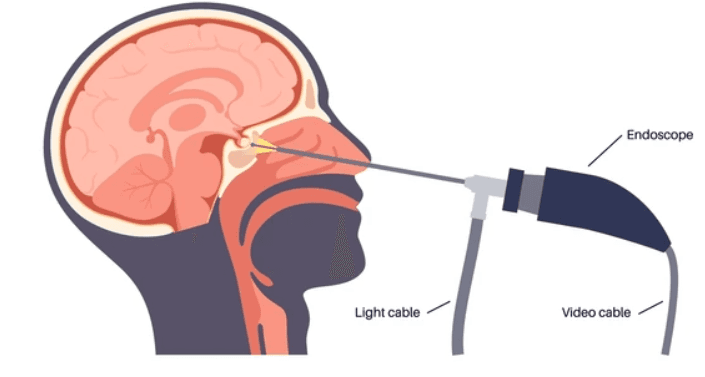
Endoscopic brain surgery (Neuroendoscopy) is a minimally invasive type of brain surgery in which the surgeon reaches the brain through the nose, and sometimes through the mouth using an endoscope; a thin tube with a camera and light at one end.
- It allows the surgeon to operate on areas at the base of the brain and the upper spine
- This gives the surgeon access to parts of the brain that may be difficult to reach using traditional surgery, which often requires larger cuts and removal of part of the skull
What conditions can be treated with endoscopic brain surgery?
Endoscopic brain surgery may be used to treat:
- Some growths in the brain (tumours)
- Abnormal or leaking blood vessels
- Aneurysms (weak bulging blood vessels)
- Certain seizure conditions (epilepsy)
- Hydrocephalus (a build-up of fluid in the brain)
What tests may be needed before surgery?
Doctors may arrange:
- Magnetic Resonance Imaging (MRI) scan – creates detailed pictures of the brain
- Computed Tomography (CT) scan – uses X-rays to show structures in the brain
- Positron Emission Tomography (PET) scan – helps identify abnormal activity or growths in the brain
- Cerebral angiography – uses dye and X-rays to look at blood vessels in the brain
- Blood tests – checks hormone levels and general health
- Vision tests – especially for pituitary tumours
These tests help doctors understand the condition and plan the safest treatment.
How do I prepare for endoscopic brain surgery?
You will receive general anaesthetic for this surgery.This means you will be asleep and will not feel pain during the procedure. If you have any questions about the surgery or anaesthetic, speak to your healthcare team before the operation.
Before surgery, you may be advised to:
- Stop smoking at least 2 weeks before surgery
- Avoid certain medicines such as Aspirin, Ibuprofen or vitamin E, if advised by your doctor
- Tell your healthcare team about all medicines, allergies and health conditions
- Follow instructions about when to stop eating and drinking before surgery
- Arrive at the hospital early to complete checks and consent forms
Your surgical team will give you specific instructions based on your condition and treatment plan.
What happens during surgery?
Step-by-step overview
- A nurse will place an intravenous (IV) line into a vein to give fluids and medicines during surgery
- You may receive medicine to help you relax
- You will then be given general anaesthetic, so you will be asleep during the operation
During the surgery
- The surgeon passes a thin tube with a light and camera (endoscope) through the nose and sinuses
- The camera shows images on a screen in the operating theatre to guide the surgery
- Special instruments are passed through the nose to treat the condition, stop bleeding or remove remove abnormal tissue or growths
- The procedure may take two to six hours or more, depending on the complexity of your surgery
The exact steps may vary depending on your condition and treatment plan. Your healthcare team will explain the procedure to you before surgery.
What happens after endoscopic brain surgery?
- After surgery, your nose and sinuses may be packed with soft dressings or bandages when the surgery is done through the nose
- These are usually removed within a week
- You may also be given antibiotics to help prevent infection
- It is normal to have some pain, discomfort or tiredness after the operation
- Tell your healthcare team if you feel unwell or have severe pain
- Most people stay in hospital for 1 to 2 days, although some may need to stay longer depending on recovery
After discharge:
- Take your medicines as advised
- Follow all instructions given by your healthcare team
- Attend follow-up appointments
- Avoid heavy lifting or strenuous activity until advised by your doctor
What are the risks of endoscopic brain surgery?
All surgery carries some risks. Most people recover well, but complications can sometimes happen.
Possible risks include:
- Reaction to the anaesthesia
- Bleeding or blood clot formation
- Infection, including meningitis
- Leakage of cerebrospinal fluid (CSF) from the nose
- Damage to nearby blood vessels, nerves or brain tissue
- Vision or eye movement problems
- Slow healing
- Pneumonia or chest infection
The risks may vary depending on your overall health and the condition being treated. Your surgeon will discuss the possible benefits and risks before surgery.
Warning signs after surgery (Red flags)
Get medical help immediately if you notice:
- Severe pain or headaches that do not improve with prescribed medicines
- Fever of 38°C or higher
- Shivering or chills
- Redness, warmth, swelling or pus around the surgery area
- Swelling around the nose
- Shortness of breath or difficulty breathing
- Chest pain
- Clear watery fluid draining from the nose, especially when sitting or standing
These symptoms may need urgent medical attention.
Lifestyle advice after surgery
- Stop smoking if you smoke
- Keep blood pressure under control
- Eat a healthy balanced diet
- Exercise regularly as advised by your doctor
- Attend all follow-up appointments
- Ask your doctor when it is safe to drive again

Myths & Facts
Endoscopic brain surgery always requires opening the skull.
Many endoscopic brain surgeries are done through the nose or mouth using small instruments and cameras, avoiding large cuts.
Recovery after surgery is immediate.
Recovery may take days to weeks depending on the condition being treated and your overall recovery
Endoscopic brain surgery is only used for tumours.
It may also be used for hydrocephalus, aneurysms, abnormal blood vessels and certain seizure conditions.
All headaches after surgery are normal.
Severe headaches, fever or fluid leaking from the nose may be warning signs and should be checked urgently.
Endoscopic brain surgery is completely risk-free.
Although minimally invasive, risks such as infection, bleeding or cerebrospinal fluid (CSF) leakage can still occur.¹²
Frequently Asked Questions
How long does endoscopic brain surgery take?
The procedure may take 2 to 6 hours or longer depending on the type of surgery and condition being treated
Will I be awake during the surgery?
No. You will receive general anaesthetic, so you will be asleep during the operation.
How long will I stay in hospital?
Most people stay in hospital for 1 to 2 days after surgery, although some may need a longer stay.
When should I seek urgent medical help after surgery?
Seek medical help if you develop severe headache, fever, chest pain, breathing difficulty or clear fluid leaking from the nose.
Can I return to normal activities after surgery?
Most people can gradually return to normal activities, but heavy lifting and strenuous exercise should be avoided until advised by the doctor.
Speak to a neurology specialist
Get an expert opinion and a personalised treatment plan at Sterling Hospitals.


