

Surgery that temporarily removes part of the skull to allow access for a brain procedure.
What is a craniotomy?
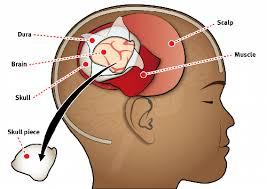
- A craniotomy is a type of brain surgery where a section of the skull is temporarily removed to access the brain
- The removed bone is replaced after the procedure
Why might a person need a craniotomy?
- To remove or treat a brain tumour
- To repair a brain aneurysm or abnormal blood vessel
- To remove blood clots or control bleeding
- To relieve pressure on the brain after injury or stroke
- To treat epilepsy or infections
What is the difference between a craniotomy and a craniectomy?
- In a craniotomy, the bone flap is replaced after surgery
- In a craniectomy, the bone is left off temporarily to allow the brain to swell safely
Are there different types of craniotomy?
- Yes, several types are used depending on the area of the brain being treated
- Examples include bifrontal, eyebrow, keyhole, orbitozygomatic and suboccipital craniotomy
Will a person be asleep during the operation?
- Most craniotomies are performed under general anaesthetic
- Some patients may remain awake for part of the surgery so brain functions such as speech or movement can be monitored
How long does the surgery take?
- A craniotomy usually takes between 3 and 5 hours
- Some complex procedures may take longer
How should a person prepare before surgery?
- Blood tests and brain scans may be required before surgery
- Certain medicines such as blood thinners may need to be stopped
- Fasting is usually required after midnight before surgery
- Smoking should be stopped before surgery to improve recovery
How long will a person stay in hospital?
- Most patients stay in hospital for around 3 to 7 days
- Some patients may require rehabilitation afterwards
What can a person expect after surgery?
- Time in the intensive care unit may be required for close monitoring
- Regular neurological checks will be performed
- Some swelling, discomfort and tiredness are common after surgery
What are the possible risks of a craniotomy?
- Infection
- Bleeding or blood clots
- Seizures
- Brain swelling
- Weakness or balance problems
- Speech or memory difficulties
Will there be pain after surgery?
- Mild to moderate pain around the incision site is common
- Pain medicines may be prescribed to help manage discomfort
How long does recovery take?
- Initial recovery usually takes 6 to 8 weeks
- Full recovery may take several months depending on the condition treated and the type of surgery performed
When can normal activities be resumed?
- Physical activity should be increased gradually
- Driving, heavy lifting and strenuous activities should only be resumed after approval from the doctor
When should a doctor be contacted after surgery?
- Fever or chills
- Redness, swelling or drainage from the wound
- Severe headache or worsening pain
- Trouble speaking or weakness in the arms or legs
- Seizures or breathing difficulties
Can a person live a normal life after a craniotomy?
- Many people recover well and return to normal daily activities
- Long-term recovery depends on the reason for surgery and overall health
Myths & Facts
A craniotomy always means permanent removal of part of the skull
In most craniotomies, the bone flap is replaced after surgery
Every person undergoing a craniotomy will remain awake during surgery
Most procedures are done under general anaesthetic, although some patients may be awake for specific parts of surgery
A craniotomy is only done for brain tumours
Craniotomy may also be performed for aneurysms, bleeding, epilepsy, infections or brain swelling
Recovery after a craniotomy always takes years
Many people recover gradually over weeks to months and return to normal daily activities
Frequently Asked Questions
Will hair be shaved before a craniotomy?
Hair around the surgical area may be partially shaved to prepare the scalp for surgery
Can a person walk after a craniotomy?
Most patients are encouraged to gradually start moving and walking with assistance during recovery
Will there be a scar after surgery?
A scar may remain after surgery, but the incision is usually placed carefully to reduce visibility
Can seizures occur after a craniotomy?
Some patients may experience seizures after surgery and may require medicines to control them
Speak to a neurology specialist
Get an expert opinion and a personalised treatment plan at Sterling Hospitals.


