

What is oesophageal cancer?
Overview
What is oesophageal cancer?
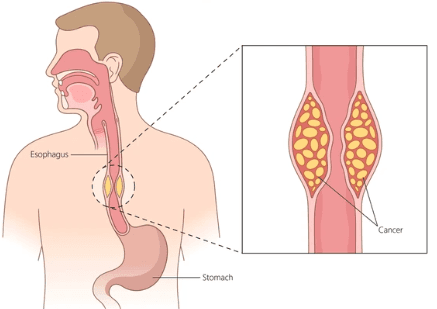
- Oesophageal cancer occurs when cells grow abnormally and uncontrollably in the food pipe (oesophagus) and form a lump (tumour)
- Oesophagus is a long muscular tube that carries food and liquids from the mouth to the stomach
- Cancer can develop in different parts of the oesophagus and may affect swallowing and digestion
What are the types of oesophageal cancer?
Oesophageal cancer starts in the inner lining of the oesophagus (food pipe). It can develop anywhere along the oesophagus.
Types include:
- Adenocarcinoma Starts in gland cells that produce mucous It usually develops in the lower part of the oesophagus
- Squamous cell carcinoma Starts in the thin, flat cells lining the oesophagus It commonly affects the upper or middle part of the oesophagus
- Rare types of oesophageal cancer Less common forms include:
Small cell carcinoma
Sarcoma
Lymphoma
Melanoma
What factors may increase the risk of oesophageal cancer?
Risk factors for oesophageal cancer may include:
- Smoking
- Regular alcohol consumption
- Frequent bouts of acidity
- Barrett’s oesophagus: Changes in the lining of the oesophagus caused by long-term acid reflux
- Excess body weight
- Not eating enough fruits and vegetables
- Achalasia: A condition in which the muscle at the lower end of the oesophagus does not relax properly, making swallowing difficult
- Previous radiation treatment to the chest or upper abdomen Bottom of Form
Common symptoms of oesophageal cancer
Oesophageal cancer may not cause symptoms in the early stages. Symptoms often appear later as the disease grows.
Common symptoms include:
- Difficulty swallowing
- Chest pain or burning
- Persistent cough or hoarse voice
- Unexplained weight loss
- Indigestion or worsening heartburn
Treatment options for oesophageal cancer
Treatment depends on the stage of cancer, its location and the patient’s overall health. Treatment options may include:
- Surgery (esophagectomy): An operation to remove part or most of the oesophagus affected by cancer
- Chemotherapy: Medicines used to destroy or slow the growth of cancer cells
- Radiotherapy: High-energy radiation used to kill cancer cells
- Chemoradiation: A combination of chemotherapy and radiotherapy given together to improve treatment results.
- Immunotherapy or targeted therapy: Treatments that help the body’s immune system fight cancer or target specific cancer cells
- Relieving oesophageal blockage: A small metal tube called a stent may be placed in the oesophagus using a thin flexible tube with a camera to keep the food pipe open and improve swallowing
- Supportive or palliative care: Treatment focused on relieving symptoms, improving comfort and maintaining quality of life.
In many patients with localised disease, surgery offers the best chance of removing the cancer completely.
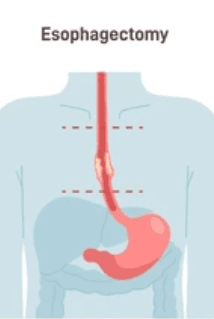
Esophagectomy
What is esophagectomy?
Esophagectomy is an operation to remove part or most of the oesophagus affected by cancer or severe disease.
Types of surgical approaches
Esophagectomy may be performed using different methods:
- Open surgery – larger cuts are made in the chest, abdomen or neck
- Minimally invasive surgery – small keyhole incisions and a camera are used
- Robotic-assisted surgery – robotic instruments help the surgeon perform precise movements
Your surgeon will decide the safest and most suitable approach for your condition.
Before surgery
Before the operation, you may need:
- Blood tests
- Computed Tomography (CT) scan or Magnetic Resonance Imaging (MRI) scan to look at the oesophagus and tumour in detail
- Heart tests such as an Electrocardiogram (ECG) to check heart health before surgery
- Endoscopic ultrasound (EUS): A test that uses a thin flexible tube with a camera and ultrasound to look at the oesophagus and nearby areas
- PET scan (positron emission tomography scan): A scan that helps detect cancer activity and check if the cancer has spread
- Review of the medicines you are taking
You will also receive instructions about eating and drinking before surgery.
How is esophagectomy performed?
Esophagectomy is performed in the following manner:
- You will be given general anaesthesia so you are asleep and do not feel pain during the surgery
- A small tube may be placed in your back (epidural catheter) to help control pain after surgery
- The surgeon makes cuts in the neck, chest or abdomen depending on the type of surgery
- The diseased part of the oesophagus is removed
- Part of the stomach may also be removed if needed
- The stomach is then moved up and joined to the remaining oesophagus to allow swallowing
- Nearby lymph nodes (small fluid-filled structures that help the body fight infection) may be removed and checked for presence of cancer cells
- A feeding tube may be placed temporarily to provide nutrition during recovery
- A tube through the nose may be used to remove air and fluids from the stomach
- Chest drains may also be placed temporarily to remove extra fluid and help healing
- The surgery may take about three to six hours depending on the type of procedure
After surgery
After the surgery:
- You may stay in the ICU for 1–2 days for close monitoring
- Hospital stay is usually around 1–2 weeks depending on recovery
- Nutrition is usually given through a feeding tube at first
- Pain medicines will help keep you comfortable
- Tubes and drains are removed gradually during recovery
- Walking and compression stockings help prevent blood clots
- Breathing exercises help keep the lungs clear
- You will be taught how to care for the feeding tube and wound before going home
Recovery
Recovery after esophagectomy takes time and adjustment. Your healthcare team will support you during recovery at home and help you gradually return to daily activities.
Eating and drinking
- A feeding tube may be needed for a few weeks after surgery
- You will slowly move from liquids to soft foods and then regular foods
- Small frequent meals are usually easier to eat and digest
- Eating slowly and chewing well may help reduce heartburn and indigestion
Wound care and hygiene
- You may need sponge baths at first until the wound heals
- You will be taught how to care for the feeding tube and wound
- Contact your healthcare team if you notice redness, swelling, bleeding or discharge from the wound
Activity and exercise
- Gentle walking helps improve recovery and prevent blood clots
- Avoid heavy lifting and strenuous activity until advised by your doctor
- Follow your healthcare team’s instructions about safe activities
Recovery time
- Many patients gradually return to normal activities over several months or an year
- Improvement continues slowly as the body heals and adjusts after surgery.
Myths and facts
Myth 1: Esophagectomy means the whole digestive system is removed.
Fact: Usually, only part of the oesophagus and sometimes part of the stomach are removed.
Myth 2: You will never eat normally again after surgery.
Fact: Most patients gradually return to eating soft and regular foods with some dietary changes.
Myth 3: All esophagectomy surgeries require large cuts.
Fact: Some procedures can be performed using minimally invasive or robotic techniques with smaller cuts.
Myth 4: Difficulty swallowing always means cancer is present.
Fact: Difficulty swallowing can also happen due to non-cancerous conditions such as acid reflux or achalasia.
Myth 5: Recovery after esophagectomy is impossible.
Fact: Recovery takes time, but many patients gradually return to normal daily activities.
FAQs
How long does esophagectomy surgery take?
The surgery may take three to six hours depending on the type of procedure.
Will I need to stay in the ICU after surgery?
Many patients stay in the ICU for 1–2 days for close monitoring.
When can I start eating after surgery?
You will usually start with tube feeding and slowly move to liquids and soft foods.
How long is the hospital stay after esophagectomy?
Hospital stay is usually around 1–2 weeks depending on recovery.
When should I contact my healthcare team?
Contact your healthcare team if you develop fever, breathing difficulty, severe pain, vomiting or wound problems.
Speak to a cancer care specialist
Get an expert opinion and a personalised treatment plan at Sterling Hospitals.