Multispecialty robotic care
Using the state-of-the-art da Vinci surgical robot, our surgeons perform robotic-assisted procedures across general surgery, urology, gynaecology, gastrointestinal surgery, and cancer surgery.
Precision. Safety. Faster Recovery.
Robotic Surgery at Sterling Hospitals.
At Sterling Hospitals, our Centre of Excellence in Robotic Surgery combines advanced robotic technology with surgical expertise to deliver precise, minimally invasive treatment for complex conditions.
Minimally Invasive
Less Pain & Scarring
Faster Recovery
Better Outcomes
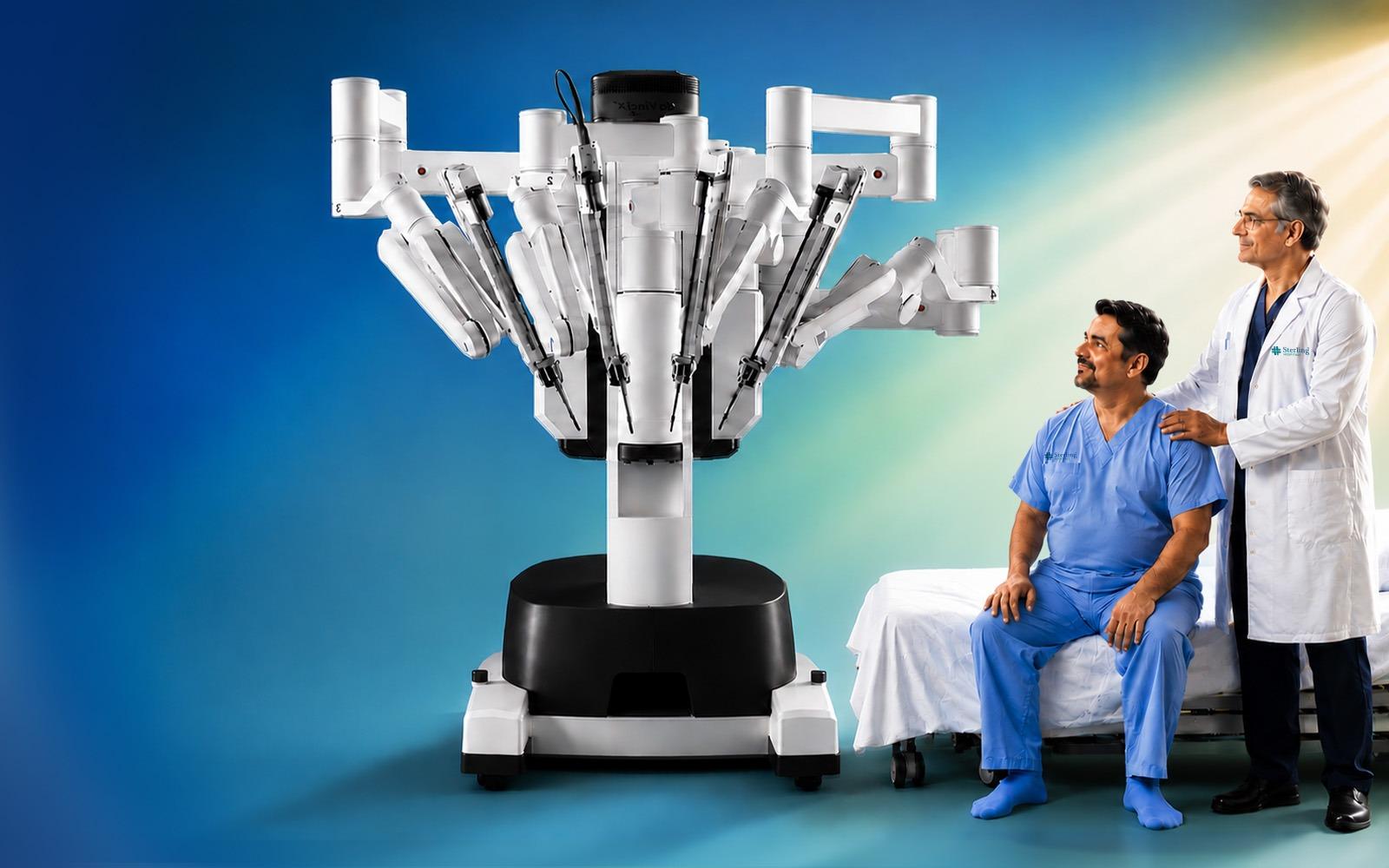
Centre of Excellence in
At Sterling Hospitals, the Centre of Excellence in Robotic Surgery brings together advanced robotic technology, experienced surgical expertise, and patient-centered care to deliver precise, minimally invasive treatment for complex conditions.
Using the state-of-the-art da Vinci surgical robot, our surgeons perform robotic-assisted procedures across general surgery, urology, gynaecology, gastrointestinal surgery, and cancer surgery.
Robotic surgery allows surgeons to operate with enhanced precision, control, vision, and dexterity through small incisions while reducing damage to surrounding healthy tissues.
Robotic surgery is supported by modern operating rooms, advanced imaging technologies, multidisciplinary planning, and tailored treatment plans.
With a focus on innovation, safety, and compassionate support, Sterling Hospitals continues to improve surgical accuracy, healing, and outcomes.
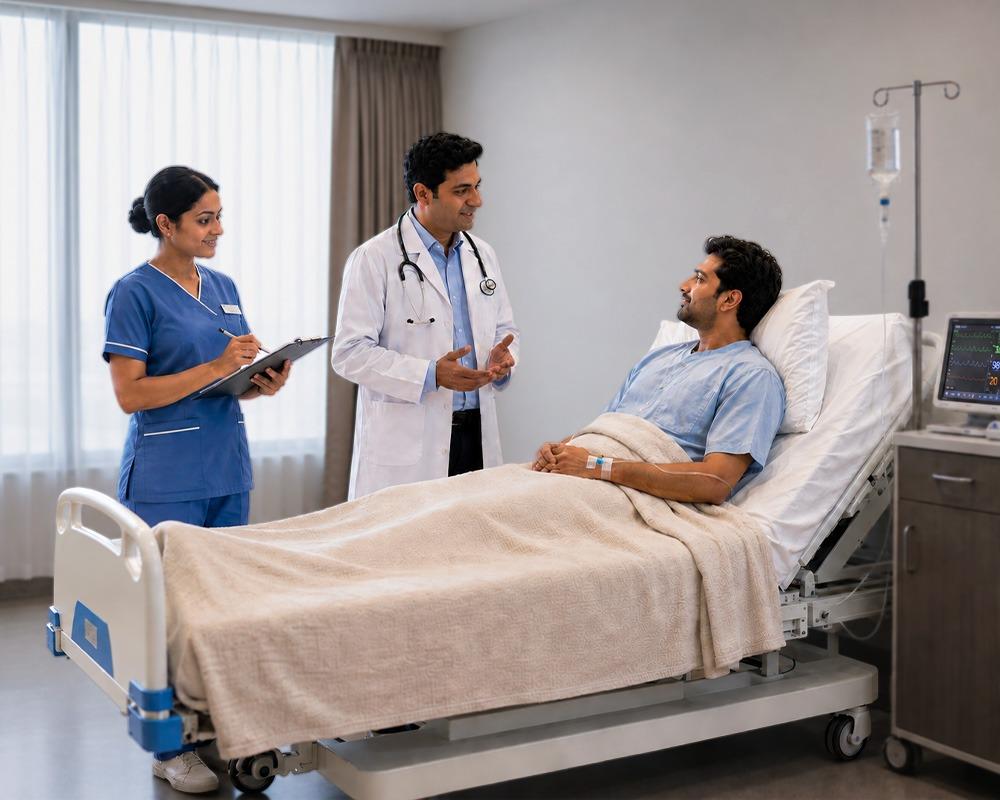
Robotic surgery is an advanced minimally invasive surgical approach that allows complex procedures to be performed through a few small incisions instead of large surgical openings. Using highly precise robotic instruments and advanced 3D visualisation, surgeons can operate with greater accuracy while minimising disruption to healthy tissues.
Reduces postoperative pain, blood loss, and scarring
Shorter hospital stays and earlier mobilisation
Lowers wound-related complications and infections
Quicker return to normal activities and work
Supports faster healing and improved recovery
Better overall experience and improved outcomes
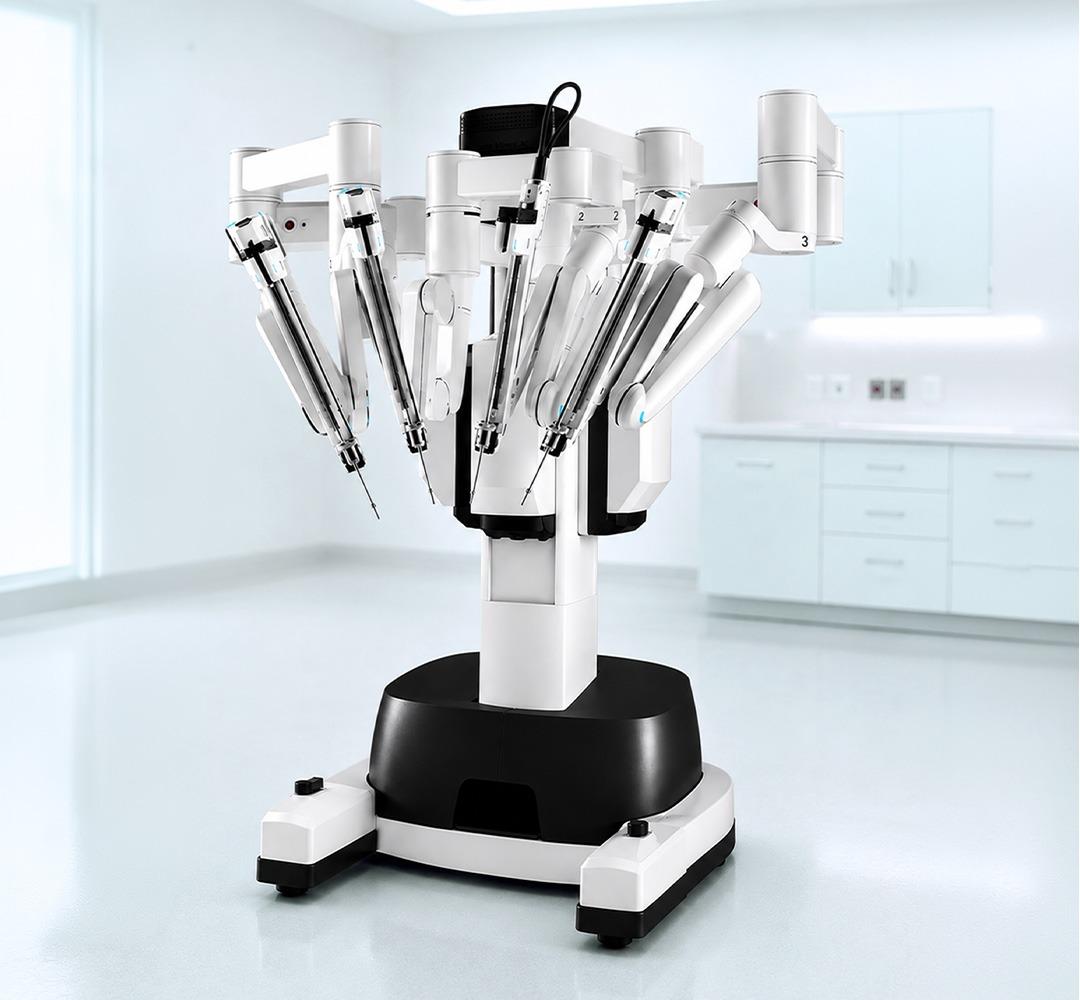
Key features of the da Vinci X Surgical System
Robotic instruments bend and rotate with greater range of motion for exceptional accuracy.
Magnified, crystal-clear 3D view helps visualise delicate tissues and structures.
Slim, flexible robotic arms enable precision in confined spaces like pelvis, chest, and abdomen.
Advanced fluorescence imaging assesses blood flow and tissue health in real time.
Filters natural hand tremors for highly precise instrument movements.
Surgeons control sophisticated stapling and tissue-management tools from the console.
Sterling Hospitals is now equipped with the da Vinci X Surgical System, an advanced robotic platform that enhances the surgeon's precision, vision, and control during complex procedures. While the surgeon remains in complete control throughout the operation, the technology helps perform delicate surgical movements with greater accuracy through small incisions.
The da Vinci X system combines advanced robotics, high-definition visualization, and intelligent surgical tools to help surgeons operate with confidence, even in hard-to-reach areas of the body. This enables a minimally invasive approach for a wide range of procedures across multiple specialties.
Enhanced Precision - Robotic instruments provide greater dexterity and range of motion for intricate movements.
Superior 3D Visualization - A magnified, high-definition 3D view helps identify nerves, blood vessels, and delicate structures.
Better Access to Difficult Areas - Surgeons can work effectively in confined spaces like pelvis, deep abdomen, chest cavity, and around vital organs.
Improved Nerve and Functional Preservation - Precision may help protect important nerves and surrounding tissues in selected procedures.
Advanced Reconstruction Capability - Complex suturing and reconstruction can be performed with greater ease and precision.
Potential for Less Pain and Faster Recovery - Enhanced precision may reduce tissue trauma and support a smoother recovery.
Our multidisciplinary robotic surgery team performs advanced procedures across multiple specialties, offering patients access to minimally invasive treatment options for a wide range of conditions.
Robotic-assisted urological surgery offers enhanced precision for complex prostate and kidney procedures.
Procedures Offered
Precise treatment for gynaecological conditions while minimising surgical trauma and supporting faster recovery.
Procedures Offered
Complex gastrointestinal procedures through a minimally invasive approach for precision and recovery.
Procedures Offered
Robotic bariatric surgery offers an advanced treatment option for individuals struggling with obesity and related metabolic conditions.
Procedures Offered
Robotic technology supports precise treatment of complex conditions involving the foodpipe (oesophagus), particularly in cancer surgery.
Procedures Offered
Robotic-assisted thyroid surgery offers a minimally invasive approach for selected thyroid conditions while supporting precision and cosmetic outcomes.
Procedures Offered
Robotic-assisted cancer surgery helps remove tumours while preserving surrounding healthy tissues.
Procedures Offered
Enhanced precision, control, flexibility, and high-definition 3D vision.
Skilled specialists across urology, gynaecology, GI surgery, thoracic surgery, bariatric surgery, and cancer surgery.
Surgeons, anaesthetists, intensivists, imaging experts, nurses, and rehabilitation teams work together.
Modern operation theatres and imaging support surgical planning, accuracy, and patient safety.
Every patient's condition, health status, surgical need, and recovery goals are evaluated.
Care is designed to reduce surgical stress, support faster healing, and improve comfort.
Robotic technology supports care in delicate, deep, or difficult-to-access areas.
Patients receive monitoring, recovery guidance, pain management, and rehabilitation support.

Book a consultation with our robotic surgery experts and explore advanced minimally invasive treatment options.
Expert Robotic Surgeons
Advanced Technology
Minimally Invasive Approach
Personalised Care
Better Outcomes Faster Recovery
Robotic Surgery Doctors

Senior Consultant & Lead Robotic Surgical Oncology

Senior Consultant - Surgical Oncology

Director - Uro Surgery, Robotic & Kidney Transplant Surgeon
Watch expert talks, patient stories, and featured videos for this speciality.
Education Center
Explore helpful information and downloadable guides from our care team.